Trusted to deliver where complexity matters











Energy and utilities organisations operate in a distinctive environment: deliver innovation while maintaining absolute reliability. Legacy infrastructure that’s been running for decades can’t simply be switched off. Operating models built around predictability need to evolve to support change. Multiple stakeholders, regulators, internal teams, and external suppliers create layers of complexity. And the pressure to modernise without increasing operational risk or compromising reliability is immense.
Emphasys has delivered complex transformations, cloud migrations, and modernisation work for major energy and utilities organisations. We understand the sector: the reliability demands, the regulatory environment, the operational complexity, and the need to move at pace without creating unnecessary risk. We bring that experience to every engagement, working as practical partners that improve delivery quality, governance, and speed while reducing the burden on internal teams.
Energy and utilities organisations typically face a common set of challenges.
Core systems have been running for decades. They’re stable but hard to change, supported by teams with deep institutional knowledge that’s often undocumented and difficult to transfer. Downtime isn’t an option: the grid needs power, the pipes need water, the systems need to work around the clock. Long-standing operating models resist change. Organisations have spent years optimising for stability and reliability, and altering how work flows, how decisions are made, or how teams are structured feels risky when reliability is paramount. Yet those same operating models can slow innovation and create silos that limit transformation. High reliability demands create natural tension with modernisation. You need to improve systems and processes but can’t afford downtime or failures. You need to move faster but can’t take shortcuts on safety or control.
You’re not just coordinating internal teams and suppliers but managing regulators, interconnected systems, and external dependencies where a change in one area can have cascading effects across others.
We don’t ask energy and utilities organisations to take unnecessary risks in the name of speed. We help them modernise strategically: identifying where change creates value, designing for resilience and reliability, and sequencing change so it improves operations without creating disruption.

Energy and utilities organisations invest in transformation to achieve three things: resilience, visibility, and efficiency. We frame our services across cloud, platform, data, and transformation leadership around those outcomes.
Cloud transformation creates more resilient infrastructure. Cloud-native architectures are designed for high availability. Automated failover means systems recover faster. Distributed architecture means failure in one place doesn’t cascade through the whole system. Platform engineering creates operational efficiency through standardised patterns, Infrastructure as Code, and automated deployment, freeing teams from manual infrastructure management to focus on delivering value. Data platforms create visibility. Energy organisations generate enormous amounts of data from generation, transmission, and distribution systems, but that data is often siloed and hard to access. Better data platforms give you a clear picture of what’s happening across your estate so you can optimise operations and respond faster to issues.
Transformation leadership creates the conditions for all of this to work together. Resilience, efficiency, and visibility aren’t achieved through technology alone. They require changes in operating model, governance, and how teams work.

Energy and utilities organisations are typically large, with multiple teams, multiple suppliers, and complex interdependencies. This is where many consultancies struggle: they can’t navigate the complexity, or they produce solutions that don’t fit with existing teams and suppliers.
Emphasys is experienced working in large, delivery-heavy environments with multiple stakeholders and dependencies. We know how to coordinate change across multiple teams, work alongside internal staff and external suppliers without creating conflict or duplication, and scale expertise up and down as programmes evolve. We can navigate complexity without oversimplifying.
Modernising legacy infrastructure in energy and utilities carries inherent risk. You’re changing systems that are critical to operations, working with infrastructure that’s been running for decades, and managing multiple dependencies and stakeholders. Getting this right requires a disciplined approach.
We reduce risk by understanding the real problem before designing solutions. Upfront clarity about what you’re trying to improve and why prevents the misalignment that creates risk downstream. Governance and quality are embedded into delivery rather than applied as a final check, which means issues get caught early rather than discovered late. We use repeatable engineering patterns that have worked in comparable environments, reducing rework and improving consistency. And we sequence changes pragmatically: identifying early wins that build confidence, managing dependencies carefully, and validating that changes work before depending on them.

Security is a particular concern in energy and utilities because infrastructure is critical and increasingly connected. Protecting it requires security that supports modernisation rather than slowing it down.
We embed security into transformation from the start, designing infrastructure and platforms with security built in, implementing governance and monitoring for ongoing visibility, and helping organisations navigate the regulatory landscape around critical infrastructure protection. Security embedded into architecture is more robust than security retrofitted later. Continuous monitoring is more effective than checks that happen only at deployment. And teams that treat security as part of their role perform better than those that see it as an obstacle.
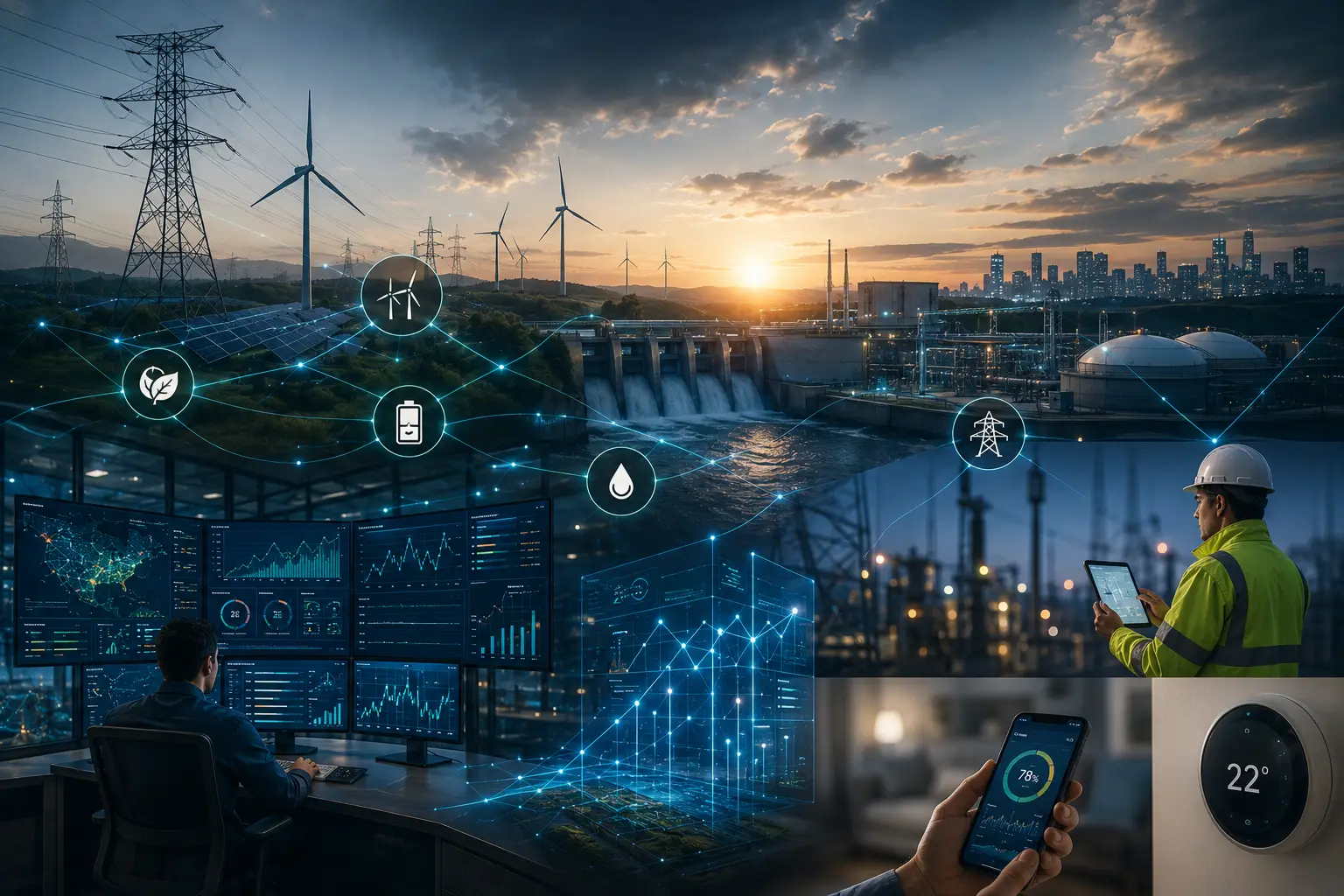
Digital transformation in energy and utilities spans multiple initiatives: modernising legacy systems, improving operational visibility, enabling smarter grids, supporting new business models such as renewables and storage, and improving customer experience.
We support these as part of a wider transformation approach. We help energy organisations identify which digital initiatives create the most value, sequence them so they build on each other, and move from intent to outcome with the governance and control the sector demands.
We bring experience, pragmatism, and accountability. We understand what modernisation means in energy and utilities, and we know how to carry it out without compromising the reliability that customers depend on.
Whether you’re modernising legacy infrastructure, planning cloud migration, improving operational visibility through data platforms, or leading wider digital transformation, let’s talk about your transformation roadmap.