Trusted to deliver where complexity matters









Manufacturing organisations operate in complex, fast-moving environments. Multiple production lines, interconnected systems, and global supply chains create significant operational complexity. Legacy systems that control machinery and processes are difficult to change. Data is scattered across departments and platforms. Teams work in silos, production, quality, maintenance, and planning, without clear visibility into the whole picture. And the pressure to improve efficiency, reduce waste, and respond faster to market demands is constant.
Emphasys helps manufacturing organisations simplify complexity and improve efficiency, visibility, and delivery quality across the organisation. Transformation in manufacturing is about more than replacing systems. The goal is a more reliable, scalable, and outcome-focused operating environment where teams have the visibility and tools they need to make better decisions and respond faster to change.
Manufacturing organisations typically share a common set of challenges.
Production planning, quality control, supply chain coordination, and maintenance management are all interconnected. A change in one area ripples through others. Data that matters, production metrics, quality issues, maintenance needs, inventory levels, is often trapped in separate systems or spreadsheets. Legacy systems are deeply embedded. Manufacturing equipment and control systems frequently run on technology that’s hard to update or replace. Production depends on them, so switching them off isn’t an option. Integrating them with modern systems is complex, and teams have developed manual workarounds to manage their limitations.
Different departments use different tools. Data doesn’t flow cleanly between them. Teams manually reconcile information or re-enter data multiple times, creating waste, slowing decisions, and increasing the risk of errors. Visibility is limited. Production managers often lack real-time insight into what’s happening on the floor. Quality teams discover issues late in the process. Maintenance is reactive rather than predictive. Planning runs on incomplete information. Better visibility would improve decisions and reduce waste, but the systems aren’t connected to provide it.
We bring business and technology together, starting with the operational challenges you’re trying to solve. We simplify complexity through better architecture and governance, reduce friction through integration and automation, and create the visibility teams need to make better decisions.

Many manufacturing organisations treat transformation as a series of system replacement projects: replace the ERP, the manufacturing execution system, the quality management system. But replacing systems individually doesn’t solve the underlying problems. Systems stay fragmented, data continues to flow poorly, and teams continue to work in silos.
We approach manufacturing transformation differently. The goal isn’t to replace systems but to improve how your organisation operates. Systems are a means to that end.
That means looking at the whole picture. What operational outcomes are you trying to improve? Faster production cycles, better quality, less waste, faster response to customer demand, safer operations? Once the outcomes are clear, we identify what changes are needed: some system, some process, some organisational, and often a combination. This approach prevents spending on systems that don’t solve your problems, and avoids the common mistake of implementing new technology without changing the processes that made the old system ineffective.
Manufacturing generates enormous amounts of data from production equipment, quality systems, supply chain platforms, and operational metrics. But that data is often siloed and underused.
Data integration connects manufacturing information so you have a single view of what’s happening. Production metrics, quality data, maintenance records, and inventory information flow together, helping you spot issues faster, optimise production sequences, and make better decisions. Platform engineering creates the infrastructure that supports manufacturing operations. Standardised patterns for data integration, real-time monitoring, and reporting reduce the time needed to introduce new capabilities, and repeatability means new production lines or facilities can be stood up using proven patterns rather than starting from scratch. Automation reduces manual toil. Production planning, quality checks, and maintenance scheduling can all be automated based on demand, equipment condition, and process data, freeing teams to focus on optimisation, continuous improvement, and strategic work.
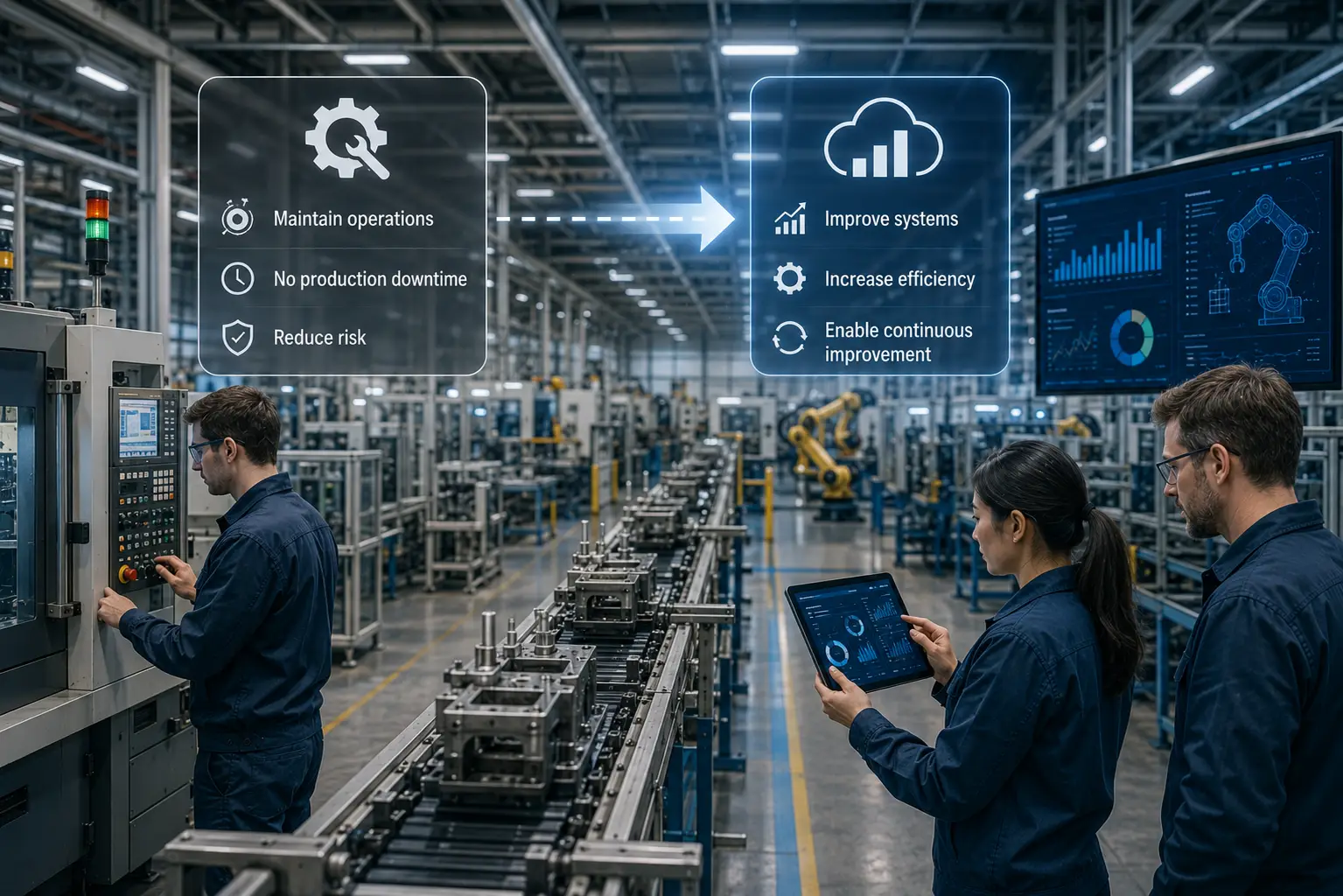
Manufacturing can’t afford to halt operations while transformation takes place. You need approaches that improve systems and processes without creating unnecessary disruption or risk to production.
We support phased legacy-to-modern change, focused on understanding the real problem, reducing disruption, and improving outcomes rather than forcing unnecessary replacement. We sequence changes so production continues, validate that new systems work before cutting over from old ones, and manage dependencies carefully so changes don’t create cascading failures. We also work with the equipment and systems you have. Not all legacy manufacturing equipment can be replaced easily, some are bespoke, expensive, and critical to operations. We help you integrate legacy equipment with modern systems, building interfaces that connect old and new and creating platforms that can work across a mix of technologies.
One of our core strengths is connecting business and technology. In manufacturing, that means starting with operational challenges: what’s slowing you down, what’s creating waste, what decisions need to happen faster? Then identifying how technology can enable improvement.
This prevents the common mistake of implementing technology that’s impressive but doesn’t address your real problems. It also stops teams getting stuck in prolonged debates about which system to buy. When the business problem is clear, the technology decisions often become straightforward.
Manufacturing transformation requires both strategic thinking and hands-on execution. You need to understand how all the pieces fit together and what outcomes you’re working towards, and you need to deliver well in the details: systems integrating correctly, teams understanding how to use new tools, and changes actually delivering the benefits that were promised.
We sit between strategy-heavy consultancies that produce recommendations nobody implements and delivery providers that build things without clear direction. We combine both. We help develop a manufacturing transformation strategy grounded in reality, and we stay involved through implementation to make sure it works in practice.
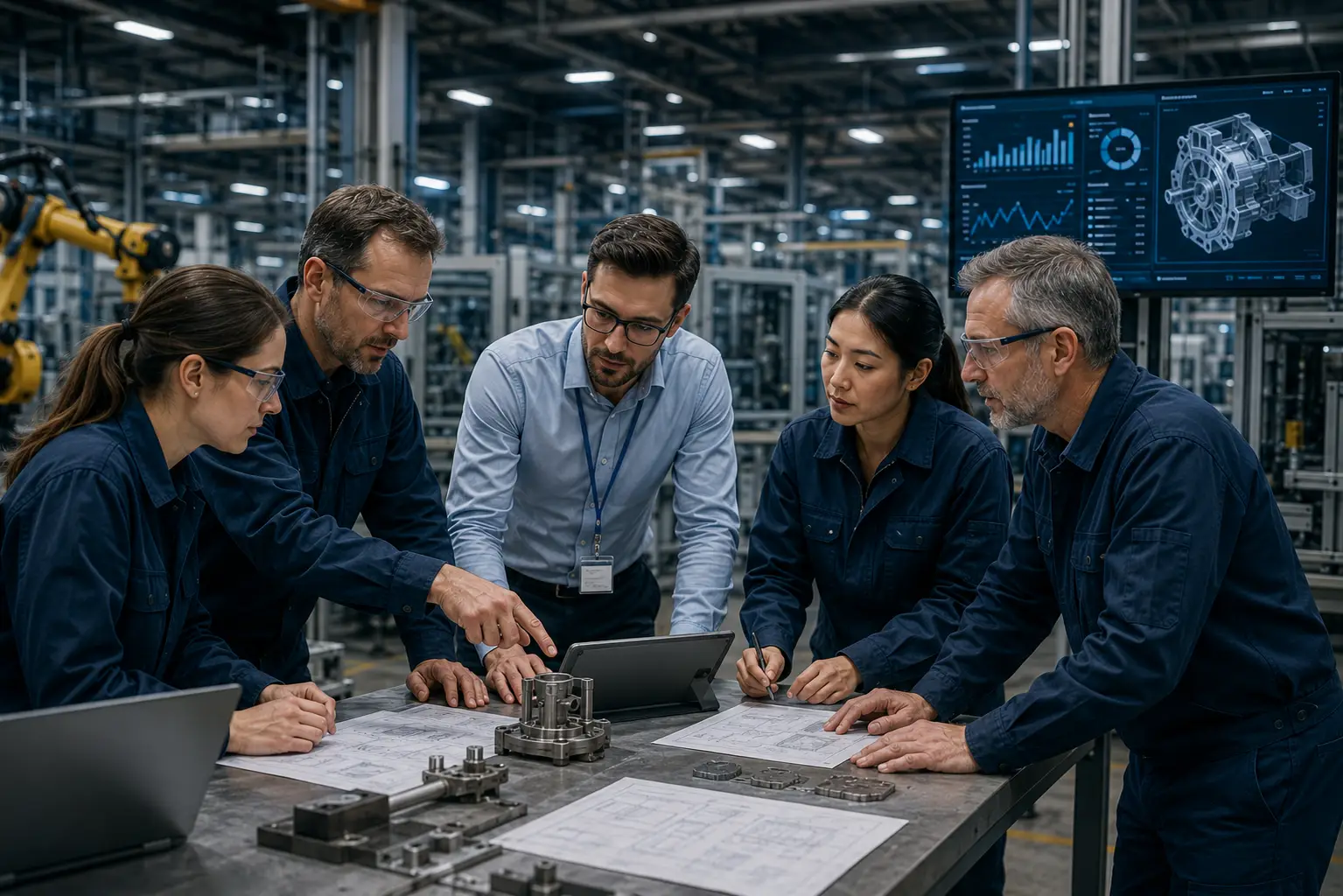
Manufacturing organisations typically have strong internal teams: production engineers, quality experts, maintenance specialists, and operations leaders who understand how things work. We don’t replace those teams. We work alongside them.
We bring specialist expertise where it’s needed, provide additional capacity to help internal teams move faster, and upskill your people in new approaches and technologies so improvement can be sustained after we leave. We also coordinate with internal teams and external suppliers so change flows smoothly without creating conflict.
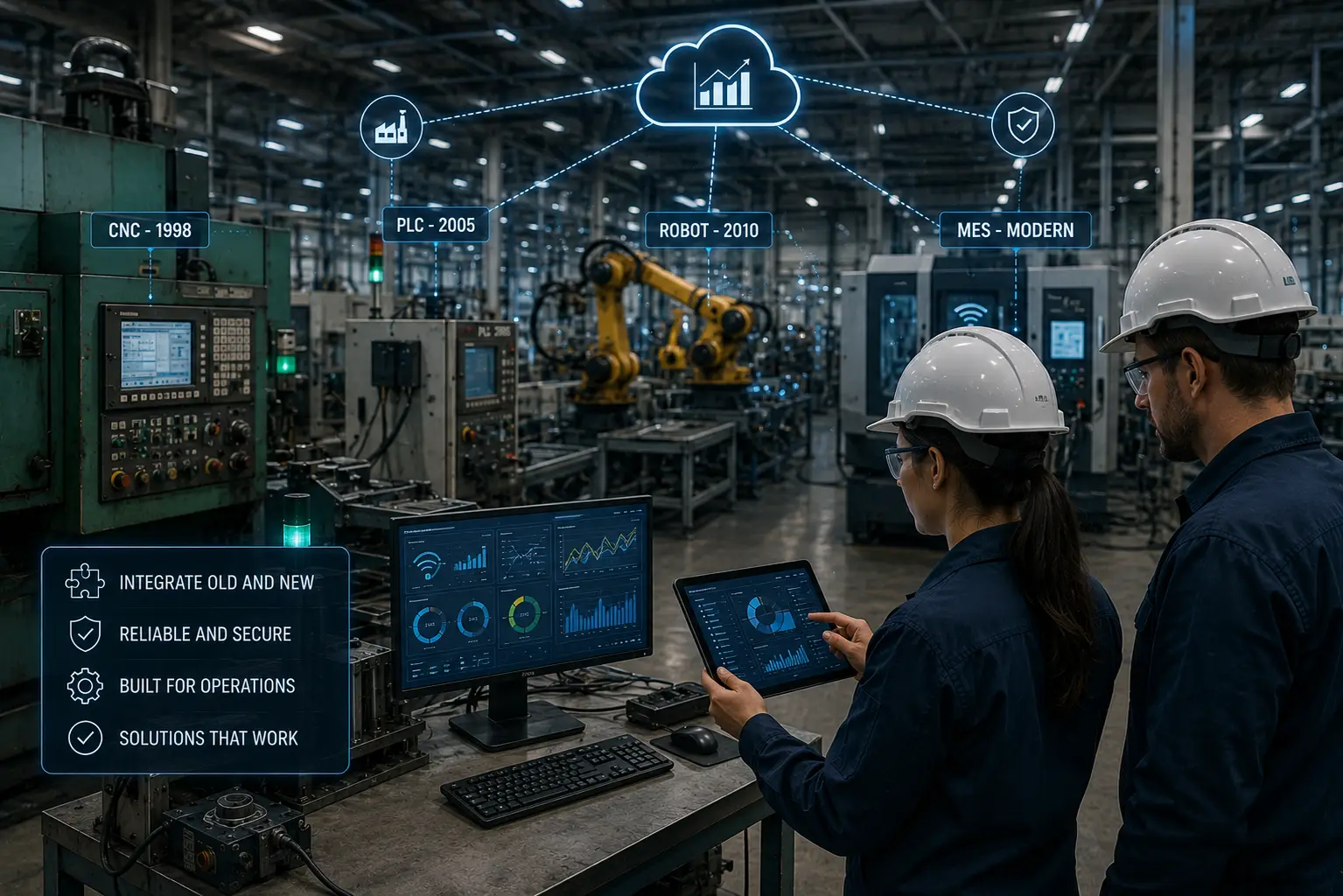
Manufacturing IT solutions need to fit how your organisation actually works. They need to integrate with equipment that might be decades old. They need to be reliable because downtime is expensive. And they need to be practical because manufacturing teams are pragmatic: they’ll work around solutions that don’t fit their needs.
We design solutions with that in mind. We understand equipment constraints, design for reliability and resilience, and make sure systems are practical enough that teams actually use them.
Whether you’re modernising legacy systems, improving operational visibility through data integration, automating manual processes, or leading wider digital transformation, let’s talk about how to improve efficiency, visibility, and delivery quality across your organisation. Get in touch with our Manufacturing team.